A recent update to VirtualMetric DataStream centers on how content moves into the platform and how securely it travels. Content management has been reworked around a GitOps workflow, TLS configuration has been reworked across devices and targets, and a broad set of new database devices, targets, and pipeline improvements have been added.
Here’s what’s new.
New features
Content Management and GitOps
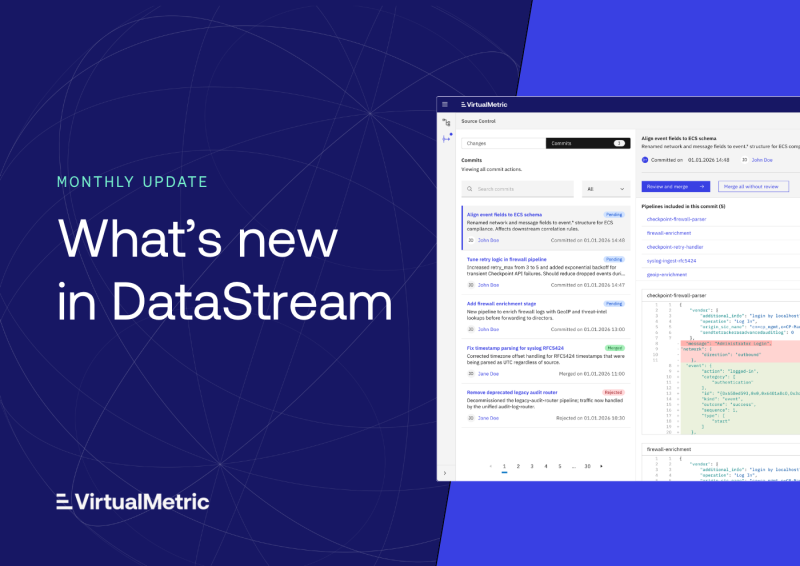
DataStream now includes a dedicated Content Management area built around a GitOps workflow, giving teams a structured way to sync and govern pipeline and detection content.
Adding a repository uses a simple form, and content-sync tokens are managed directly in the UI with their roles visible. A new Library gives synced scripts a central home, and those scripts can be signed, with a dedicated content setting that controls whether unsigned scripts are allowed to run at all. Detections and pipelines show their sync provenance, including commits made by CI, so teams can see exactly where a piece of content came from and how it got there.
For teams treating pipeline and detection content as code, this brings the platform in line with the workflows they already use elsewhere.
Reworked TLS Configuration
TLS setup has been reworked across every device and target that supports it, giving teams more precise control over encrypted connections.
Version ranges can now be constrained and validated, so teams can enforce the specific TLS versions their security policy requires. Mutual TLS client certificates use the same secret-source dropdown as the CA certificate, keeping certificate management consistent in one place. TLS sources can also reference secrets from Vault, tying certificate handling into the platform’s secret management.
Improvements
New database and protocol devices
This update significantly expands the range of sources DataStream can collect from, with a focus on databases:
- MySQL, PostgreSQL, Oracle — query-dataset device support for all three databases
- MSSQL — a redesigned connection step with a progressive-disclosure query editor
- DNS, FTP, Kerberos — three new protocol-based device integrations
- Honeypot devices — eight honeypot device types added on a shared factory
New targets
Fifteen new target integrations expand where DataStream can route data.
Security platforms and SIEMs:
- Rapid7 — routing to Rapid7’s security operations platform
- Sumo Logic — cloud-native log analytics
- Logpoint — delivery to Logpoint SIEM
- ArcSight — integration with existing ArcSight workflows
- Graylog — open log management
- Datadog — observability and monitoring
- Snare — Snare-compatible receivers
Messaging and streaming:
- OTLP — OpenTelemetry Protocol output
- Synadia Cloud and Aiven Kafka — managed messaging and streaming
- WarpStream — Kafka-compatible streaming
- RabbitMQ — message-broker delivery
Cloud storage:
- Wasabi Hot Cloud Storage, Oracle Cloud Object Storage, and OVHcloud — object storage for durable, cost-effective retention
GCP targets also now enforce a 10,000 batch_size ceiling and expose max_bytes for finer control over delivery.
Pipeline improvements
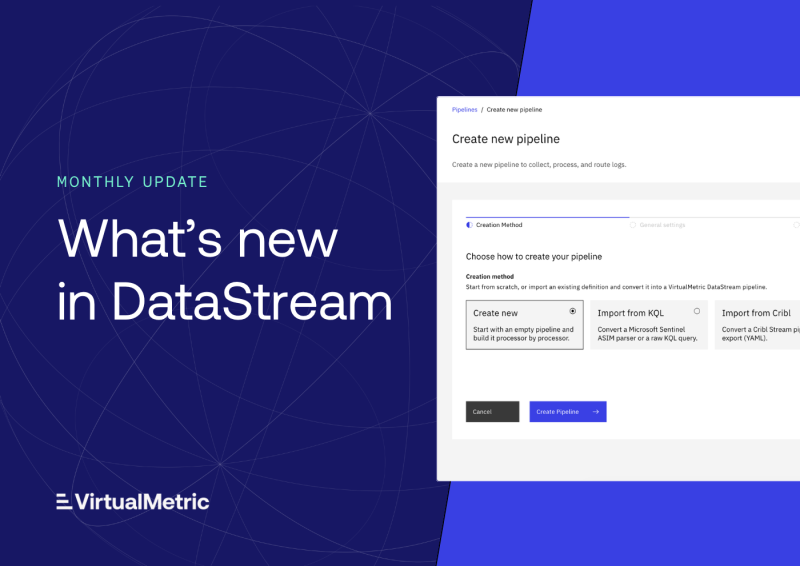
- Pipeline creation flow — new pipelines can be created from scratch or imported directly from KQL, Cribl, or Logstash, making migration from other tools far easier
- Pending commit indicator — pipeline listing and detail pages now show when a pipeline has an uncommitted change pending
- Pipeline usage tracking — a pipeline invoked by another pipeline now shows as in use, so teams can see dependencies before making changes
These are the highlights – this update also includes bulk actions on device and target tables, per-row Log Stream sparklines, Director reload and restart from the UI, passwordless identity-provider sign-in, IP-based and provider-managed tenants, audit log export to CSV, and a broad set of usability refinements.
Looking ahead
These changes bring DataStream closer to the way modern security teams already work — content managed as code, encryption configured with precision, and more sources and destinations available out of the box. We’ll continue expanding on all three.
As always, feedback from real-world deployments helps guide future development. If you would like a walkthrough of any of these features or want to share suggestions, we would be glad to hear from you.
See VirtualMetric DataStream in action

Start your free trial to experience safer, smarter data routing with full visibility and control.