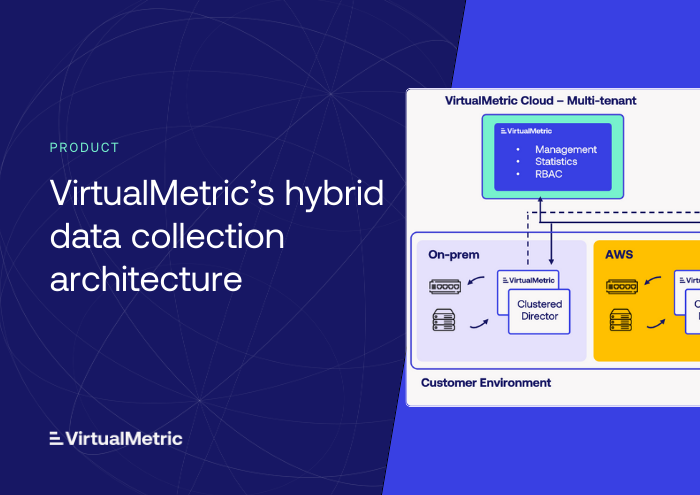
Security operations teams depend on telemetry from everywhere: endpoints, identity systems, cloud platforms, networks, applications, and security tools. This data underpins detection, investigation, compliance, and response.
What has changed is the scale, diversity, and impact of how telemetry is collected. Cloud adoption, consumption-based SIEM pricing, and the rise of data lakes alongside traditional analytics platforms have reshaped both the volume of data and the consequences of handling it poorly. In many organizations, the mechanisms responsible for gathering and preparing security data were designed for a very different operational reality. As environments became hybrid and cloud-native, data collection quietly turned into a limiting factor for SOC effectiveness.
Increasingly, this responsibility is described as security data collection architecture: a distinct architectural layer that determines how telemetry is acquired, prepared, governed, and routed before it reaches analytics and detection platforms.
As a result, security data collection architecture has moved from an implementation detail to a first-class SOC concern.
Why traditional security data collection no longer fits modern SOCs
Most existing collection approaches were built around a narrow set of assumptions: predictable data formats, a limited number of sources, and a single analytics destination. Those assumptions no longer hold.
Several structural issues now surface consistently across modern security operations.
Agent-only collection creates operational drag
Agent-based collection provides deep visibility, but relying on agents everywhere does not scale operationally. Large environments must manage deployments, updates, compatibility issues, credentials, and change control across thousands of systems.
In regulated or critical infrastructure environments, installing third-party software often requires lengthy approval cycles. What starts as a visibility strategy frequently becomes an operational bottleneck, slowing onboarding and increasing risk rather than reducing it.
Forwarding without processing undermines data quality
Syslog and basic forwarding models focus on transport, not preparation. Raw logs arrive in vendor-specific formats with inconsistent fields and limited context. Schema drift is common, and downstream platforms are forced to compensate with custom parsing, duplicated logic, and brittle detection rules.
All this leads to poor correlation, higher false positives, and security teams spending time fixing data instead of investigating threats.
Cloud-processed collection raises governance concerns
Some collection architectures require security telemetry to be processed outside the organization’s environment. For many industries, this introduces immediate challenges around data residency, regulatory compliance, and internal risk acceptance.
Even when technically feasible, these models complicate security reviews and introduce dependencies that are difficult to unwind later.
Single-destination pipelines force unnecessary trade-offs
Many collection tools assume one primary destination, typically a SIEM. As SOCs adopt data lakes, long-term archives, and specialized analytics platforms, this assumption breaks down.
Teams are forced to duplicate pipelines, deploy parallel tooling, or choose between cost control and visibility. Complexity and operational overhead increase rapidly.
The hidden cost of treating data collection as an afterthought
Individually, these challenges are manageable. Together, they create systemic friction.
Security teams end up with:
- Fragile pipelines built from scripts and point solutions
- Rising ingestion and storage costs in downstream platforms
- Inconsistent data quality across sources
- Limited flexibility when architectures or platforms change
Over time, data collection becomes the constraint that shapes what the SOC can realistically detect, investigate, and retain, often without being explicitly designed to do so.
From transport mechanism to architectural layer
These pressures have driven a shift in how mature SOCs think about telemetry. Data collection is no longer viewed as a simple forwarding function, but as its own architectural layer, positioned between data sources and analytics platforms.
This layer exists to prepare telemetry before it reaches downstream tools.
Defining the security data collection architecture layer
A modern security data collection architecture is responsible for far more than moving logs from point A to point B.
At a minimum, it must support:
- Secure acquisition of telemetry across on-premises, cloud, and hybrid environments
- Normalization and structuring of data into consistent, security-relevant schemas
- Filtering, enrichment, masking, and redaction based on policy and use case
- Reliable delivery and durability guarantees, even during failures
- Routing to multiple destinations, each with different cost, performance, and retention models
When these responsibilities are embedded directly inside a SIEM or scattered across agents and scripts, they inherit constraints that surface later as cost overruns, operational fragility, and reduced detection effectiveness.
Treating data collection as a dedicated architectural concern allows SOCs to design telemetry flows intentionally aligning data quality, cost control, and security outcomes before analytics and detection logic are applied.
Data collection as a foundational SOC capability
Security teams are increasingly evaluated on efficiency, resilience, and signal quality. Telemetry that is expensive, inconsistent, or difficult to govern undermines all three.
For this reason, security data collection architecture now shapes how SOCs design environments, control costs, and sustain effective detection over time.
In the next article, we examine how agentless, agent-based, and hybrid collection models fit into this architectural shift, and why many SOCs are moving toward an agentless-first, agents-when-needed approach to security telemetry.
See VirtualMetric DataStream in action

Start your free trial to experience safer, smarter data routing with full visibility and control.
Related content
Security Architecture
You Can't Detect What You Never Collect: Telemetry Coverage in the Agentic SOC
Security Architecture
Why Data Normalization Is the Foundation of AI Security
Security Architecture
The AI Zero-Day Wave Is Here. Is Your Logging Infrastructure Ready?
Security Architecture